Gisela Lange · 15 November 2026
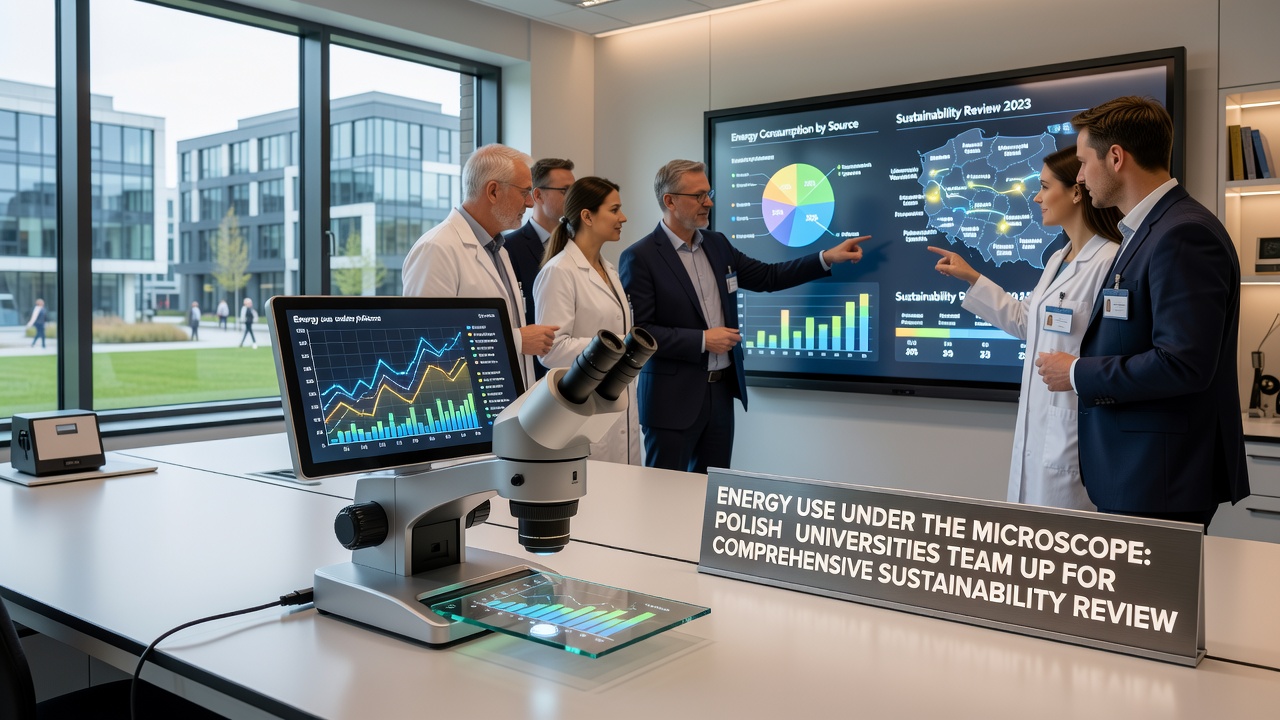
Energy Use Under the Microscope: Polish Universities Team Up for Comprehensive Sustainability Review
Polish universities have launched a coordinated effort to examine energy consumption patterns across multiple campuses, and the project draws in institutions from Warsaw, Krakow, and Wroclaw to gather baseline data on electricity, heating, and cooling demands. The collaboration pools resources from engineering departments, environmental science faculties, and facilities management teams, while it aligns with broader European Union directives on energy efficiency that require member states to report progress on reducing institutional carbon footprints by 2030.
Scope of the Joint Review
Researchers at the participating universities collect real-time data from building management systems, and they cross-reference it with historical utility records dating back five years. The review covers lecture halls, research laboratories, student housing, and administrative offices, whereas separate working groups focus on transportation fleets and on-site renewable installations such as photovoltaic arrays already installed at several sites. Data indicates that laboratory equipment and data centers account for disproportionate shares of peak demand at technical universities, while older dormitory buildings show higher heat loss during winter months.
Data Collection Methods
Teams deploy wireless sensors in representative buildings and they calibrate readings against national grid statistics supplied by the Polish transmission system operator. The approach allows analysts to isolate variables such as occupancy rates during exam periods and seasonal variations in daylight hours, and it produces granular profiles that facilities teams can use to schedule equipment maintenance or adjust HVAC setpoints without disrupting academic schedules. One study revealed that simple scheduling changes in ventilation systems reduced evening energy draw by measurable percentages at similar institutions abroad, and the Polish teams plan to test comparable adjustments on their own campuses.
External benchmarks come from reports issued by the European Environment Agency, which tracks higher-education energy metrics across the continent, and project leads reference those figures when setting internal targets for the current review cycle.
Participating Institutions and Timeline
The consortium includes the University of Warsaw, Jagiellonian University, and Wroclaw University of Science and Technology, and each contributes specialized expertise in areas ranging from thermal modeling to behavioral studies of student energy use. Work began in early 2025 with an initial audit phase, while the full dataset is scheduled for release in November 2026. That release will include comparative rankings of building performance and recommendations for phased retrofits funded through national and EU grants.

Observers note that the November 2026 deadline coincides with Poland's required submission to the EU on progress toward the Energy Efficiency Directive targets, and the university data will feed into national reporting frameworks maintained by the Ministry of Climate and Environment. Teams have already completed preliminary modeling for several Warsaw buildings, and the models project potential savings if insulation upgrades and LED retrofits proceed on the proposed schedule.
Integration with National and EU Goals
Poland's higher-education sector consumes a notable share of public-sector energy, and government statistics show that universities represent one of the larger categories within the education subsector. The current review therefore supplies actionable figures that can inform future allocation of modernization funds, while it also tests protocols for data sharing that other public institutions might adopt. Researchers discovered early in the process that differences in metering infrastructure between older and newer campuses create gaps in comparability, and they developed standardized conversion methods to address those inconsistencies.
What's interesting is how student behavior patterns influence overall consumption, and surveys distributed alongside technical monitoring reveal preferences for extended lighting in common areas during late-night study sessions. The teams incorporate those findings into recommendations that balance comfort with efficiency targets, and they avoid prescriptive measures that might face resistance from campus communities.
Expected Deliverables
By the November 2026 milestone the consortium will publish an open-access database of anonymized consumption profiles, and it will release a technical manual describing the sensor networks and analysis pipelines used throughout the project. Additional outputs include campus-specific roadmaps that list prioritized interventions ranked by estimated payback period and carbon reduction potential. The roadmaps draw on case studies from other European universities that have completed similar audits, and they adapt those lessons to Polish climate conditions and building stock characteristics.
Conclusion
The joint sustainability review supplies Polish universities with a shared evidence base for future energy decisions, and the structured timeline leading to November 2026 ensures that findings arrive in time to influence both institutional planning cycles and national compliance reporting. Continued coordination among the participating institutions will determine how quickly identified measures move from analysis into implementation, while the open data approach allows external researchers to validate and extend the results.