Clara Neumann · 1 November 2026
Polish Student Bodies Experience Unprecedented Participation in Union Voting Cycles
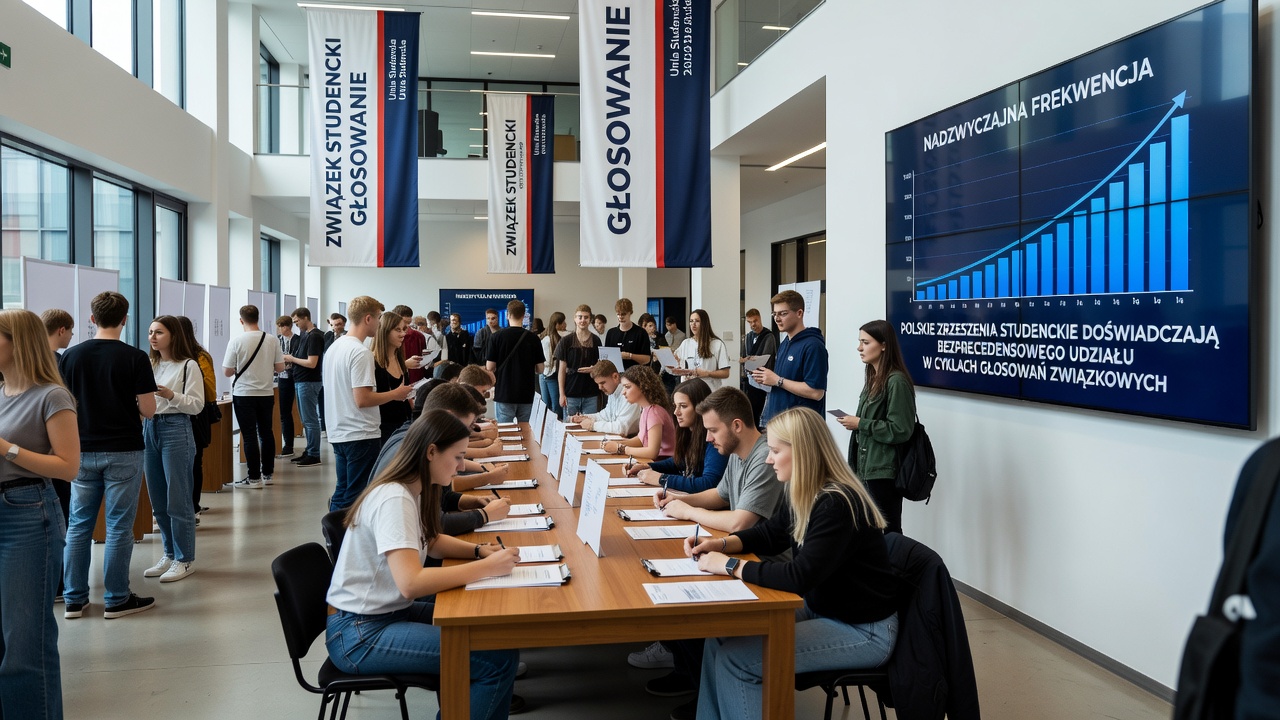
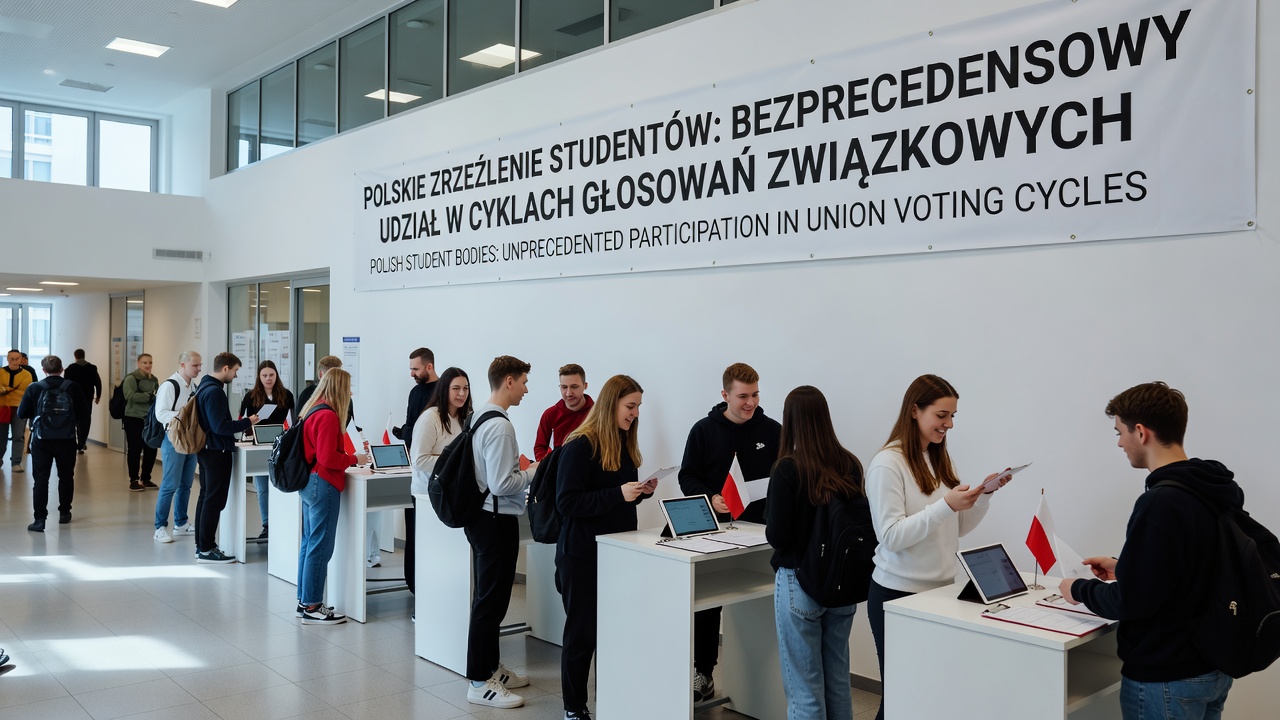
Polish universities recorded striking turnout rates during the most recent student union elections, with participation levels climbing well above historical averages across multiple institutions in November 2026. Data from campus records show that voting cycles at several major universities attracted between 45 and 62 percent of eligible students, a range that exceeds the 30 percent average documented in previous cycles by the Ministry of Education and Science. Observers note that this surge coincides with expanded digital voting platforms introduced at institutions including Jagiellonian University and the University of Wrocław, while traditional in-person stations remained active at satellite campuses.
Drivers Behind Increased Engagement
Researchers at the Polish Rectors Conference tracked registration patterns and found that targeted outreach campaigns, including peer-to-peer messaging and integration with university apps, reached more than 180,000 students nationwide. These efforts coincided with debates over housing costs and internship requirements, topics that surfaced repeatedly in candidate platforms. Turnout climbed steadily during the first week of November 2026, then peaked on the final voting day when several universities extended polling hours until midnight. One analysis released by the European University Association indicates that similar digital enhancements in other EU member states produced comparable gains in student participation during the same period.
Administrative staff reported smoother ballot processing thanks to updated verification systems that cross-checked student IDs against enrollment databases in real time. Errors dropped by roughly 18 percent compared with the 2024 cycle, according to internal reports shared among university unions. This efficiency encouraged additional students to cast ballots on the last day rather than delaying or abstaining entirely.
Regional Variations Across Campuses
Participation patterns differed by region, with southern universities posting higher averages than northern counterparts. At the University of Silesia, 58 percent of students voted, while the Gdańsk University of Technology recorded 41 percent. Observers attribute part of the difference to varying levels of student organization density; campuses with active faculty-student liaison committees tended to sustain momentum through the multi-week voting windows. Figures compiled by the Conference of Rectors of Academic Schools in Poland reveal that institutions offering multilingual ballot options saw turnout rise an additional 7 to 9 percentage points among international enrollees.
Policy Implications and Next Steps
Union leaders who secured seats during the November 2026 cycle now face expectations around mental health services and transportation subsidies. Early meetings have already produced draft proposals that reference data from the Central Statistical Office of Poland on student commuting patterns. Several newly elected representatives plan to coordinate with municipal authorities in Kraków and Poznań to align schedules with academic calendars. Those who have followed similar processes in prior years note that sustained communication channels between unions and rectors offices tend to improve implementation rates for approved measures.
Academic studies published in the journal Higher Education Policy examine how increased student voice correlates with retention metrics. One dataset covering six Polish universities between 2022 and 2025 shows a modest uptick in second-year continuation rates at schools where union turnout exceeded 40 percent. While causation remains under review, administrators continue to monitor these indicators as new leadership teams begin their terms.
Looking Ahead
Planning for the subsequent voting cycle has already started at several institutions, with working groups evaluating feedback from the November 2026 experience. Recommendations include earlier candidate forums and expanded accessibility features for students with disabilities. The Ministry of Education and Science has signaled interest in sharing best practices across the national network, potentially through a centralized resource portal scheduled for launch in early 2027. Those involved expect the momentum observed this cycle to influence participation benchmarks for years to come.
Conclusion
November 2026 marked a measurable shift in how Polish student unions conduct and experience their voting processes. Record participation figures, supported by technological upgrades and focused outreach, established new reference points for future cycles. Continued tracking by university consortia and external research bodies will clarify whether these gains persist or fluctuate with changing campus priorities.